Showing posts with label The Punjab. Show all posts

Thursday, November 21, 2013

A visit to the Punjab (part 2)

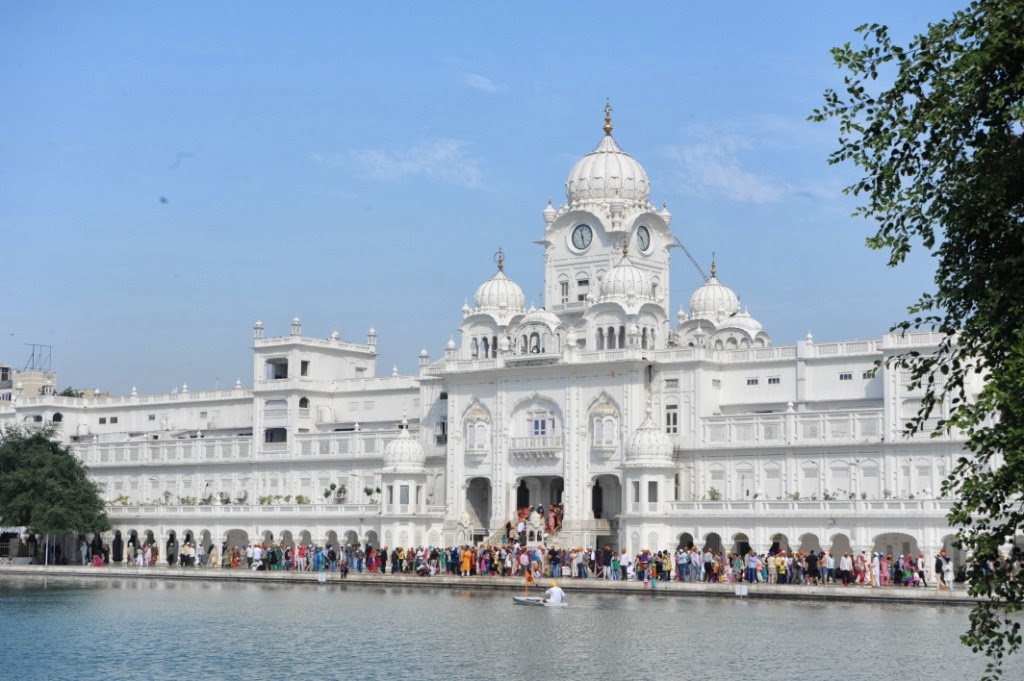
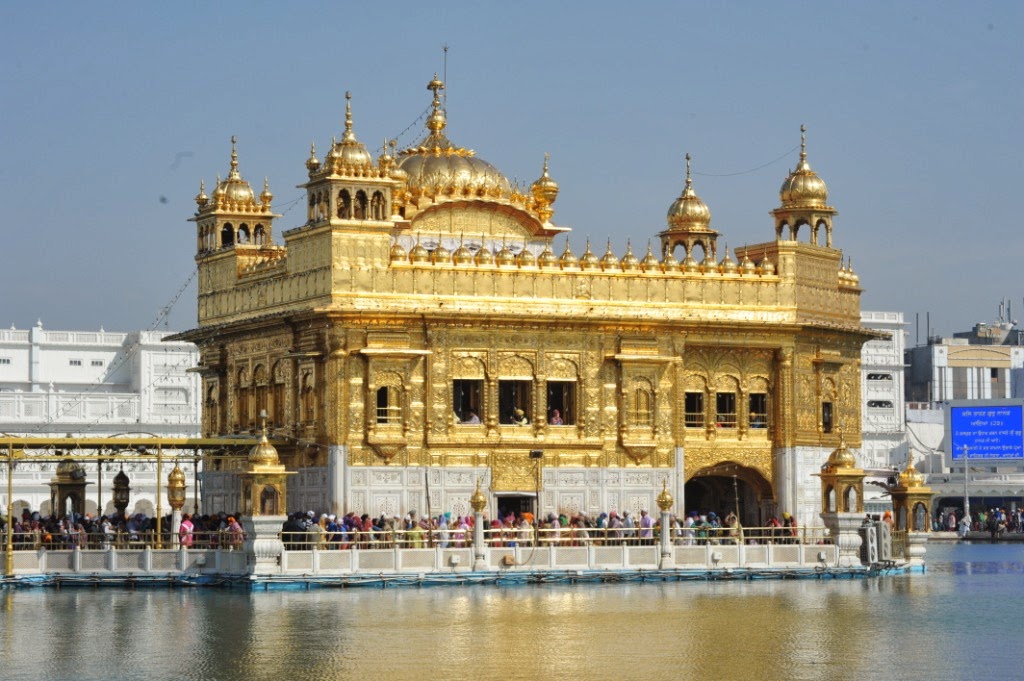
The second place to visit when in Amritsar is the Golden Temple: the most sacred place for the Sikhs and the heart of their religion.

The basic beliefs of Sikhism are as follows:

  • Sikhs believe in one God. He is the same for all people of all religions.
  • Sikhism teaches equality of all people. Sikhism preaches that people of different races, religions, or sex are all equal in the eyes of God. Sikhism teaches the full equality of men and women.
  • Sikhism emphasizes daily devotion to the remembrance of God. One should remember God at all times.
  • Sikhism teaches religious freedom. All people have the right to follow their own path to God without condemnation or coercion from others.
  • Sikhism emphasizes a moral and ethical life. A Sikh should represent moral responsibility and righteousness.
  • Sikhism rejects all forms of rituals such as idol worship, pilgrimages, fasting, and superstitions.
  • Sikhism teaches service to others. The primary task in life should be to help the poor, needy, and oppressed.
  • Sikhs are supposed to be saints, scholars, and soldiers.
  • The word Sikh means disciple or student. Sikhs are the disciples of God who follow the writings and teachings of the ten Sikh Gurus.

The temple was built in the 16th Century and rebuilt in the 18th Century following an attack by the Afghans.

The complex is open to anyone: all religions and all castes are welcomed here.

The complex is open 24/7 and has a kitchen that feeds over 100,000 people a day.

All the people who help feed everyone are volunteers.

We were quite lucky to be taken on a tour of the kitchens, to see the food being prepared. The sight of thousands of plates, ready to be handed out was amazing.

In June of 1984, the Golden Temple was the site of Operation Blue Star: an attack by the Indian Army on the temple to dislodge Sikh separatists who had holed up in the complex.

The subsequent fallout from Operation Blue Star was the assassination of Prime Minister Indira Gandhi by two of her Sikh bodyguards in October 1984 and the massacre of 3,000 Sikhs in anti-Sikh rioting that followed.

Despite the bloodshed that happened here, the temple is a very peaceful place. I’ve never really felt spiritual anywhere in India (maybe because of all the people) whereas I feel it everywhere in Ireland.

The Golden Temple is definitely a spiritual place. It has a sense of Majick that I can feel and something that I’ve been missing. It was so nice to feel that again.

I know the photos don’t do it any justice but I hope you like them.

Enjoy:


In the kitchen: making the chapatis


Bathing in the sacred waters


In the kitchen: lunch cooking away
In the kitchen: more food cooking away
A sit-down meal


Cutting up the onions
Getting a sense of the number of meals served each day


A dodgy pair of characters


A visit to the Punjab (part 1)

Last week, I went up to the Punjab to its capital, Amritsar.

There are two Punjabs: Indian and Pakistani Punjab. The state was divided during the Partition of 1947. It saw some of the worst rioting during the partition as large numbers of Hindus and Muslims moved between India and Pakistan.

The city was the centre of unrest prior to partition with Sikh separatists demanding a Sikh-only state.

The unrest saw one of the worst excesses of British military happen on 13 April 1919 with an event known as the Jallianwala Bagh massacre.

Warning: history facts follow:

Basically, in March 1919, the British passed the Rowlett Act, extending emergency powers implemented during World War One as a means of dealing with unrest in India. The act gave the Raj the authority to arrest and imprison anyone suspected of conspiring to perform terrorist acts against the Raj. It allowed arrests without warrants, indefinite detention without trial, and jury-less, secret trials.

Now...the Indians didn’t take too kindly to this and protests began in the Punjab.

To set a context, you have to remember that since the Mutiny of 1857, or First War of Independence depending on your stance, the British were paranoid of another uprising.

On 13 April 1919, a large crowd of crowd of Sikhs, Hindus and Muslims gathered in Jallianwala Bagh. The park was, and still is, surrounded on all sides by houses and buildings. At the time of the massacre, there were few narrow entrances (most of them locked). Today, there is only one entrance.

What the crowd didn’t know was that on that very same day, the Raj declared Martial Law in the Punjab.

BRIG-GEN Edward Dyer led a group of troops into the square, blocking off escape to the crowd.

Without warning, BRIG-GEN Dyer ordered his troops to open fire on the crowd. His soldiers (Gurkhas and Baluchi) obeyed the order and the resulting chaos saw between 400 and 1,500 people killed.

This is what happened at Jallianwala Bagh.

In the aftermath BRIG-GEN Dyer died in 1927. The Governor of the Punjab at the time, Michael O’Dwyer, was assassinated in 1940 by a survivor of the massacre and independence activist, Udham Singh.

So where is all this history going you may ask ??

The first place we were taken to in Amritsar was the site of the Jallianwala Bagh massacre.

It’s now a park and a memorial to all those who have died in the struggle for Indian independence.

It’s quite a beautiful place and quite a contrast from what it must have been like at the time of the massacre.

You can sense the sadness in the soil (well...I could).


There are still walls where the bullet holes are visible and the park contains bushes shaped in the form of soldiers in the firing position.

Here are photos from the site:

Jallianwala Bagh just after massacre
The one entry point into the park
The park now
Some of the bullet holes
Some more of the bullet holes
An example of the soldier-shaped bushes
The well where 120 people died


More bullet holes


The eternal flame